Newsletter Subscribe
Enter your email address below and subscribe to our newsletter

 ByJohn A
Hard forks implement incompatible changes, creating divergent chains and forcing users to upgrade or face invalid blocks. Soft forks tighten rules while preserving backward compatibility, allowing non-upgraded nodes to remain part of the chain but potentially narrowing validation scope. Both aim to adjust governance, security, and incentives, yet the choice shapes fragmentation risk and upgrade coordination. The debate centers on stability versus adaptability, inviting consideration of governance, timing, and stakeholder alignment before committing to a path.
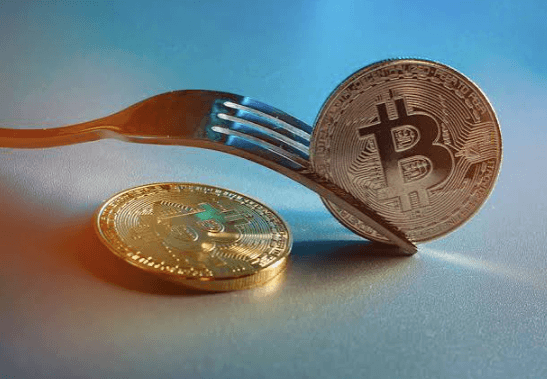
Hard forks and soft forks are two methods for upgrading a blockchain protocol, differing primarily in how they handle compatibility with existing blocks and nodes.
Hard forks enforce new rules, rendering old clients obsolete and prompting a clear chain split.
Soft forks maintain compatibility.
Analysts monitor governance dynamics, noting hard forks often catalyze consensus shifts and structural reconfigurations within networks.
Forks alter the balance of governance, incentives, and security assumptions by redefining which nodes and validators are aligned with the protocol rules and the resulting economic penalties or rewards.
The shift reorders consensus participation, impacting fork governance structures and validator loyalties.
Security implications include altered attack surfaces, revised finality guarantees, and resilience tradeoffs tied to chain selection, validation incentives, and governance leverage.
Real-world forks illustrate how protocol changes translate into concrete shifts in governance, incentives, and security posture. Observed cases show divergence in node participation, miner signaling, and social coordination around upgrade etiquette.
Tradeoffs emerge between rapid adaptability and network cohesion, highlighting fork governance as a central driver. Technical merit competes with consensus fragility, demanding disciplined, transparent upgrade pathways and measured risk assessment.
See also: Artificial Intelligence and Big Data
Choosing an upgrade path demands a structured framework that translates governance and technical considerations into actionable steps. The framework emphasizes clear decision criteria, defined milestones, and traceable accountability. It distinguishes update strategies from governance processes, aligning stakeholder roles with measurable outcomes. It analyzes risk, compatibility, and rollback options, delivering a repeatable, auditable process that supports disciplined, freedom-minded implementation without destabilizing the network.
Hard forks and soft forks offer distinct upgrade paths, balancing governance, security, and continuity. A precise metric helps frame their impact: historically, hard forks have produced longer-term chain splits in about 30–40% of notable upgrades, while soft forks typically retain a unified ledger with fewer disruption events. The choice hinges on risk tolerance, stakeholder coordination, and desired speed of change; rigorous planning and clear signaling remain pivotal to minimizing fragmentation and maximizing consensus during protocol evolution.